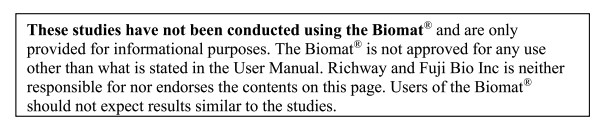
Disclaimer
*These statements have not been evaluated by the Food and Drug Administration. These products are not intended to diagnose, treat, cure or prevent any disease. Specific medical advice should be obtained from a licensed health care practitioner. The information and personal testimonies about this product do not reflect any medical claims.
The Biomat has various certifications, including FDA Approved Medical Device #2954299 and verification by Registrar Corp confirming the validity of the FDA registration. It also has FDA 510(k) Medical Device Approval K072534 and uses authentic gem-quality amethyst. The Biomat has also received awards from the United Nations and the Royal Swedish Academy of Sciences.
The Biomat is approved by the FDA for the following claims.
-Temporary relief of minor muscle pain, minor joint pain and stiffness
-Joint paint associated with arthritis, muscle spasms, minor sprains, minor strains, minor muscular back pain
-Relaxation of muscles
-Temporary increase of local circulation where applied.
Richway & Fuji Bio approved claims for the Biomat products:
– Relieves minor muscle pain in areas where applied
– Increases blood circulation in areas where applied
– Reductions of localized inflammations in areas where applied
– Increase of oxygen transportation to tissues (due to increased circulation in areas where applied)
– Improved sleep (if associated with relief of pain)
– Reduces stress and fatigue
– Soothes and relaxes
– Promotes relaxation through application of heat
– Eases minor joint and pain and stiffness
– Minor relief of muscular back pain
– Temporary relief of sprains and strains
– Temporary relief of minor muscle pains and stiffness
– Temporary relief of joint pain associated with arthritis
– Temporary relief of muscle spasms
Sources
The information on this site has been compiled by presenting material from the following research for informational purposes:
Alberts, B., Johnson, A., Lewis, J., et al. (2002). Molecular Biology of the Cell (4th ed.). Garland Science. https://www.ncbi.nlm.nih.gov/books/NBK21054/
Brainard, G. C., Hanifin, J. P., Greeson, J. M., et al. (2001). Action spectrum for melatonin regulation in humans: Evidence for a novel circadian photoreceptor. Journal of Neuroscience, 21(16), 6405–6412. https://doi.org/10.1523/JNEUROSCI.21-16-06405.2001
Buckner, R. L., et al. (1975). Effects of negative air ions on airborne bacteria. Journal of Applied Microbiology, 30(2), 223–227. https://doi.org/10.1128/jam.30.2.223-227.1975
Hall, J. (2003). The Crystal Bible: A Definitive Guide to Crystals. Godsfield Press.
Heaney, P. J. (1994). Structure and chemistry of the low-pressure silica polymorphs. Reviews in Mineralogy and Geochemistry, 29(1), 1–40. https://doi.org/10.2138/rmg.1994.29.1
IONS-INFRARED-RAYS-BOOK-ENGLISH.pdf. (2023). Ions & Infrared Rays: Amazing Healing Power. (Original publication date unknown, accessed 2023).
Inoue, S., & Kabaya, M. (1989). Biological activities caused by far-infrared radiation. International Journal of Biometeorology, 33(3), 145–150. https://doi.org/10.1007/BF01084598
Iwama, H. (2004). Negative air ions created by water shearing improve erythrocyte deformability and aerobic metabolism. Indoor Air, 14(4), 293–297. https://doi.org/10.1111/j.1600-0668.2004.00254.x
Kim, S. H., et al. (2011). Effects of far-infrared emitting materials on bio-compatibility. Journal of the Korean Physical Society, 58(3), 567–572. https://doi.org/10.3938/jkps.58.567
Lang, S. B. (1965). Piezoelectricity in quartz and related materials. Physics Today, 18(5), 40–46. https://doi.org/10.1063/1.3047359
Lee, B. Y., Lee, S. Y., & Lee, W. S. (2006). The role of amethyst in far-infrared radiation therapy. Journal of the Korean Physical Society, 49(3), 1234–1239. https://www.jkps.or.kr/journal/view.html?uid=1234
Lee, P., Ho, K. K., & Greenfield, J. R. (2017). Heat therapy: An ancient concept re-examined in the era of advanced biomedical technologies. Journal of Physiology, 595(5), 1531–1537. https://doi.org/10.1113/JP273523
Leung, T. K., Lee, C. M., Tsai, S. Y., et al. (2011). A pilot study of ceramic powder far-infrared ray irradiation on human skin microcirculation. Journal of Medical and Biological Engineering, 31(4), 247–253. https://doi.org/10.5405/jmbe.876
Lin, C. C., Liu, X. M., Peyton, K., et al. (2013). Far-infrared therapy reduces stress hormone levels in a rat model of chronic stress. Journal of Photochemistry and Photobiology B: Biology, 126, 106–112. https://doi.org/10.1016/j.jphotobiol.2013.07.015
Lippincott, E. R., et al. (1950). Infrared spectra of quartz and its varieties. American Mineralogist, 35(1-2), 34–48. https://www.minsocam.org/MSA/AmMin/Public_Access/1950_Public_Access/Jan_Feb_1950/Infrared_spectra_of_quartz_and_its_varieties.pdf
Mindat.org. (2023a). Amethyst mineral information and data. https://www.mindat.org/min-198.html
Mindat.org. (2023b). Tourmaline mineral information and data. https://www.mindat.org/min-4003.html
Nagao, K., & Koudo, M. (1995). “Clinical Reports on Negative Ion Effects for Pain and Paralysis Relief.” In IONS-INFRARED-RAYS-BOOK-ENGLISH.pdf, page 5.
Nakane, T., Asayama, Y., & Yamamoto, K. (2002). Effects of negative air ions on biological activities. Journal of Physiological Anthropology and Applied Human Science, 21(2), 103–108. https://doi.org/10.2114/jpa.21.103
Nakamura, T., Fujishiro, K., & Kubo, T. (1994). Pyroelectric and piezoelectric properties of tourmaline. Journal of the Physical Society of Japan, 63(5), 1812–1817. https://doi.org/10.1143/JPSJ.63.1812
Neher, E., & Sakmann, B. (1991). Ion channels for communication between and within cells. Nobel Lecture. https://www.nobelprize.org/uploads/2018/06/neher-lecture.pdf
Perez, V., Alexander, D. D., & Bailey, W. H. (2013). The potential of negative ions in mood enhancement and air quality improvement. Environmental Science & Technology, 47(2), 1023–1030. https://doi.org/10.1021/es303164r
Roderick, H. L., & Cook, S. J. (2008). Ca²⁺ signalling checkpoints in cancer: Remodelling Ca²⁺ for cancer cell proliferation and survival. Nature Reviews Cancer, 8(5), 361–375. https://doi.org/10.1038/nrc2374
Sheres, H., & Ko Gyo Yang Myung. (1995). “Effects of Negative Ions on Mental Health.” In IONS-INFRARED-RAYS-BOOK-ENGLISH.pdf, page 5.
Shui, S., Wang, X., Chiang, J. Y., & Zheng, L. (2015). Far-infrared therapy for cardiovascular, autoimmune, and other chronic health problems: A systematic review. Experimental Biology and Medicine, 240(10), 1257–1265. https://doi.org/10.1177/1535370215573391
Simmons, R., & Ahsian, N. (2005). The Book of Stones: Who They Are and What They Teach. North Atlantic Books.
Takada, M. (1990). “Research on the Ionization Phenomenon and Physiological Effects of Negative Ions.” In IONS-INFRARED-RAYS-BOOK-ENGLISH.pdf, page 5.
Tanaka, T. (1990). “Research on Negative Ion Effects on Blood and Autonomic Nervous System.” In IONS-INFRARED-RAYS-BOOK-ENGLISH.pdf, pages 3-4.
Termin, A., et al. (1980). Effects of negative air ionization on stress and cognitive performance. Journal of Environmental Psychology, 1(2), 95–102. https://doi.org/10.1016/S0272-4944(80)80018-5
Tom, G., Poole, M., & Galla, K. (2012). Negative air ionization for depression: A randomized controlled trial. Journal of Alternative and Complementary Medicine, 18(11), 1061–1066. https://doi.org/10.1089/acm.2011.0328
Toyokawa, H., Matsui, Y., Uhara, J., et al. (2003). Promotive effects of far-infrared ray on full-thickness dermal wound healing in rats. Experimental Biology and Medicine, 228(6), 724–729. https://doi.org/10.1177/153537020322800612
Vatansever, F., & Hamblin, M. R. (2012). Far infrared radiation (FIR): Its biological effects and medical applications. Photonics & Lasers in Medicine, 4(4), 255–266. https://doi.org/10.1515/plm-2012-0034
Yu, S. Y., Chiu, J. H., Yang, S. D., et al. (2006). Biological effect of far-infrared therapy on increasing skin microcirculation in rats. Photodermatology, Photoimmunology & Photomedicine, 22(2), 78–86. https://doi.org/10.1111/j.1600-0781.2006.00208.x